Finance, Online Money

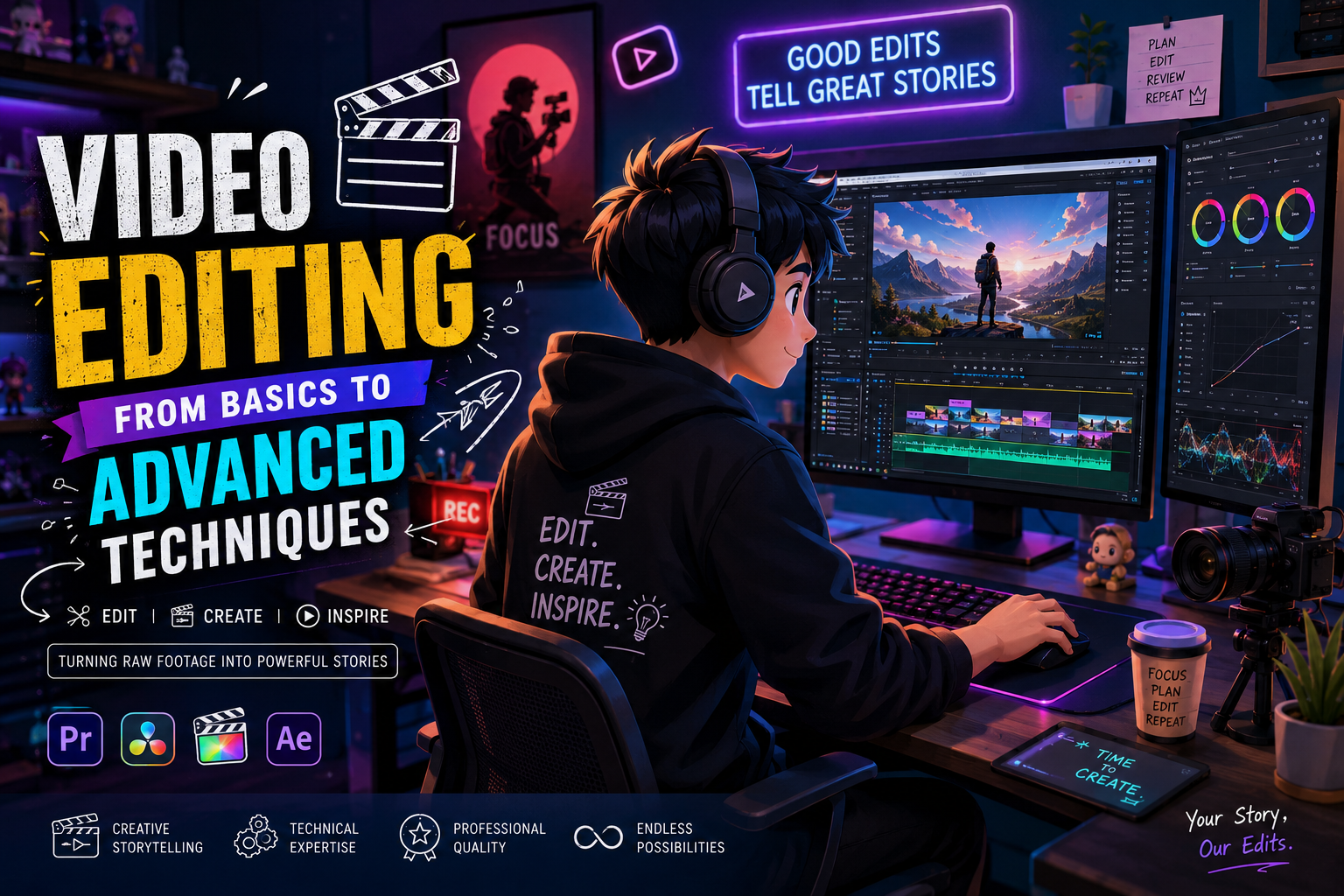
Video Editing: From Basics to Advanced Techniques

Video Editing: From Basics to Advanced Techniques

 Video editing has become one of the most valuable digital skills in today’s content-driven world. From YouTube creators and filmmakers to businesses and influencers, everyone relies on high-quality videos to connect with audiences. Whether it’s a cinematic movie, a gaming montage, a vlog, or a business advertisement, editing transforms raw footage into a professional and engaging final product.

What is Video Editing?

 Video editing is the process of arranging, trimming, improving, and combining video clips, audio, graphics, and effects to create a finished video. It allows creators to tell stories, improve visual quality, and keep viewers engaged.

Modern editing software makes it possible to create impressive videos even with basic equipment. Popular editing software includes Adobe Premiere Pro, DaVinci Resolve, Final Cut Pro, and CapCut.

The Basics of Video Editing

Before learning advanced techniques, understanding the fundamentals is important.

1. Cutting and Trimming

This is the most basic editing skill. Editors remove unnecessary parts of clips and arrange scenes in the correct order. Clean cuts make videos smoother and easier to watch.

2. Transitions

Transitions connect one clip to another. Simple cuts are most common, while fades, zooms, and motion transitions add style when used correctly.

3. Audio Editing

Good audio is as important as visuals. Editors adjust background music, remove noise, sync voiceovers, and balance sound levels.

4. Text and Titles

Adding titles, subtitles, and captions helps improve communication and viewer retention. Captions are especially important for social media content.

5. Color Correction

Color correction improves brightness, contrast, and overall visual quality. It helps videos look more professional and consistent.

Intermediate Editing Techniques

 Once the basics are mastered, editors move toward more creative and technical methods.

Motion Graphics

 Motion graphics include animated text, logos, and visual effects. These are commonly used in advertisements, intros, and explainer videos.

 Speed Ramping

Speed ramping changes the speed of clips for dramatic effects. Slow motion highlights details, while fast motion adds energy.

Sound Design

Professional videos use layered audio effects, cinematic background music, and ambient sounds to create emotion and immersion.

Multi-Camera Editing

Used in interviews, podcasts, and events, multi-camera editing allows switching between different camera angles smoothly.

Advanced editing combines creativity with technical precision.

Visual Effects (VFX)

VFX adds elements that were not originally captured in the footage. Green screen effects, explosions, CGI, and cinematic enhancements are examples.

Color Grading

Unlike basic correction, color grading creates a specific mood or style. Movies often use grading to achieve dramatic or cinematic looks.

3D Animation Integration

Editors sometimes combine 3D models and animations into videos for professional commercials and gaming content.

Advanced Storytelling

Professional editors understand pacing, emotion, and visual storytelling. A well-edited video can make viewers feel excitement, suspense, or inspiration.

The Growing Demand for Video Editing

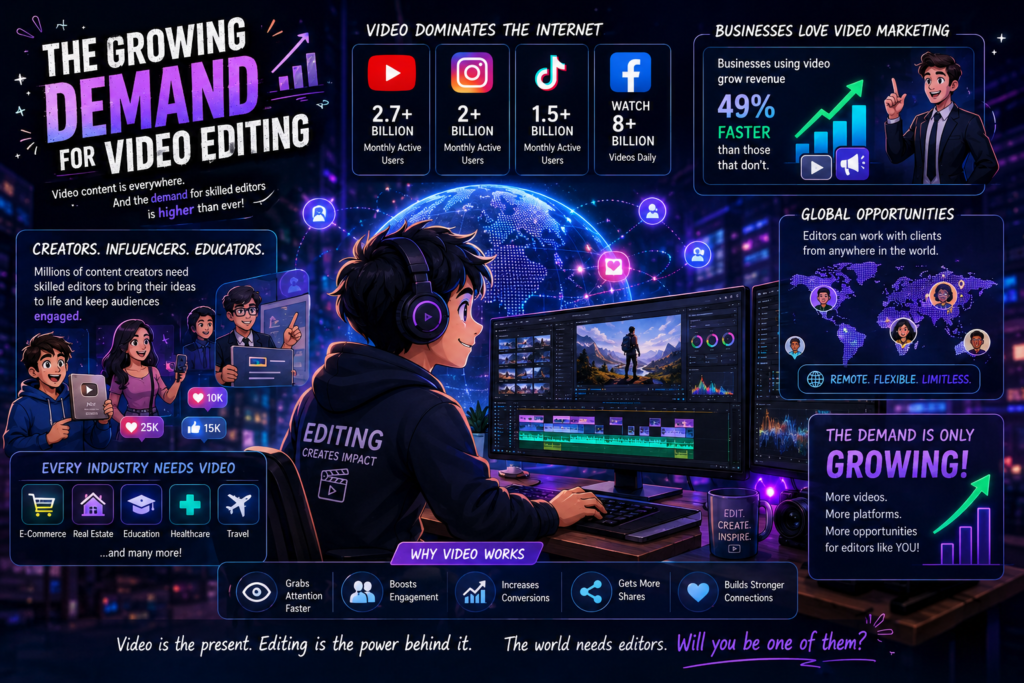
The demand for video editing is increasing rapidly because video content dominates the internet. Platforms like YouTube, Instagram, and TikTok rely heavily on engaging videos.

Businesses use video marketing to promote products and services because videos attract more attention than plain text or images. Educational creators, gaming channels, vloggers, and online brands all require editors to produce high-quality content.

Short-form content has also changed the editing industry. Fast-paced reels and shorts require dynamic cuts, subtitles, effects, and engaging visuals within seconds.

The Growing Demand for Video Editing

Skills Needed to Become a Video Editor

A successful video editor needs both technical and creative skills.

  • Creativity and storytelling
  • Knowledge of editing software
  • Audio and color correction skills
  • Understanding of pacing and transitions
  • Patience and attention to detail
  • Ability to adapt to trends

Practice is essential. Many professional editors started by editing simple videos on phones before moving to advanced software.

Career Opportunities in Video Editing

Video editing offers many career paths:

  • YouTube editor
  • Film editor
  • Social media content editor
  • Freelance video editor
  • Commercial advertisement editor
  • Gaming montage editor
  • Wedding and event editor

Freelancing has become especially popular because editors can work remotely with clients worldwide.

The Future of Video Editing

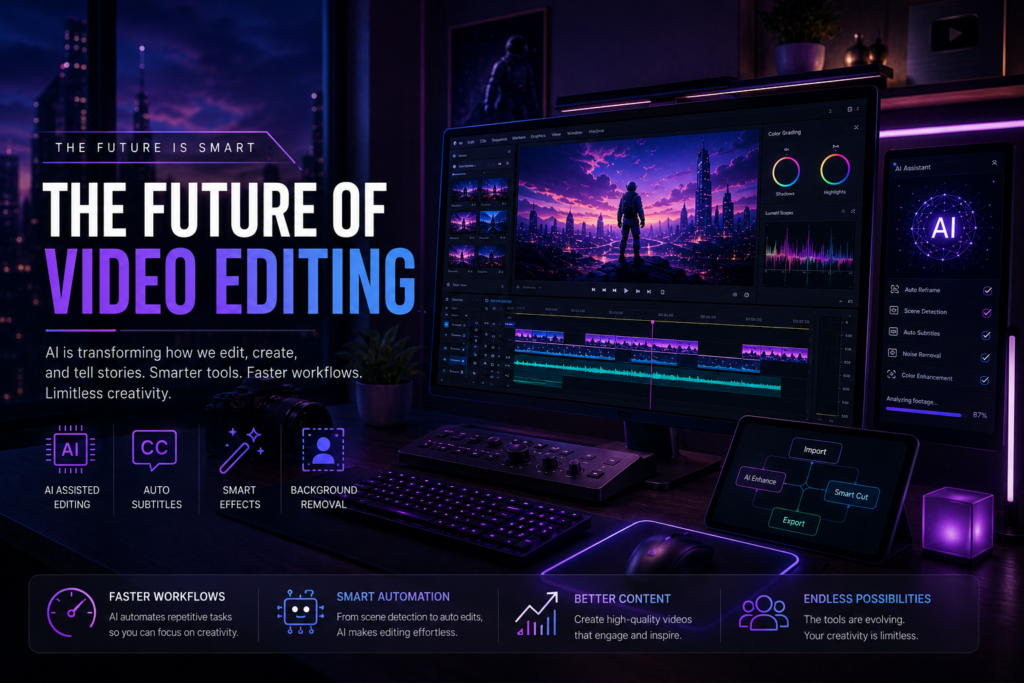
The Future of Video Editing

Artificial intelligence is changing video editing rapidly. AI tools can now auto-generate subtitles, remove backgrounds, improve audio, and even create rough edits automatically. However, creativity and storytelling still require human skill.

As online content continues to grow, video editing will remain one of the most in-demand digital skills. Brands and creators will always need editors who can make content visually appealing and engaging.

Conclusion

Video editing is more than just cutting clips together. It is a powerful combination of creativity, storytelling, and technical skill. From simple trims to advanced cinematic effects, editing shapes how audiences experience content. With the rise of digital media, businesses, influencers, and creators depend heavily on skilled editors to stand out online.

Learning video editing takes time and practice, but the opportunities are enormous. Whether someone wants to create content for fun or build a professional career, mastering video editing can open doors to endless creative possibilities.

Leave a Reply

कृपया ध्यान दें: सभी comments review के बाद approve किए जाते हैं। Approve होने पर आपकी earning सुरक्षित रूप से आपके wallet में जोड़ दी जाएगी।